
Canada
Travel Guide
How to use my travel guides
My travel guides are organised in two main sections:
Overview
This will help you to decide if this is a location for you, and if so, where you may want to spend your time. For larger countries, I also provide additional overviews of different regions, states and territories.
Best things to do in…
Here I list specific things to see and do. For each, I provide star ratings so that you can easily see how good, unique and adventurous each place is. This means that you can easily pick out where sounds right for you!
Overview
I love Canada! Although I am originally from the UK, I have lived, worked and travelled extensively in Canada. Canada has a great variety of scenery and wildlife, and it is truly a nature lover’s dream. In some areas like the Canadian Rockies, particularly along the Icefields Parkway (more info later), you will be swivelling your head constantly to take in the picture-postcard views at every turn.
Canada is a developed, diverse and generally safe and easy to travel. For my younger readers (35 and under), it’s also a great place to undertake a Working Holiday Visa (also known as ‘IEC’ – ‘International Experience Canada’) to help fund your travels here; for more information on this, see my guide here:
Language
The official languages of Canada are English and French. The majority of the population speak English with the Province of Quebec being majority French speaking. That being said, you will find people who speak French as a first language outside of Quebec and those who speak English as a first language within Quebec. I found that many people understand some English, particularly younger people; however, the same cannot be said for the reverse, with many Canadians outside of Quebec not being able to speak French.
Economy and Safety
Canada has an advanced Western economy and is a democratic country. People are generally tolerant of those with other views and faiths, including those of other religions and those from the LGBT+ community, although you will find that views of Canadians vary from place to place and person to person.
Canada is an extremely safe country. Sadly, you will notice that in many major cities, however, there is a drug and homelessness problem, with the country having a number of regular fentanyl users. This was a shock when I arrived, although I had been forewarned. I was unaware of how great the extent of the problem was until I spent more time in major cities.
For many visitors to Canada for adventure seeking travellers, there is a risk of injury or exposure while trekking. Canada has plenty of stunning, well-defined hiking trails and excellent campgrounds. Many are in remote areas, however, with limited, or often no, reception (cell service) to call for assistance. Weather can change rapidly and without proper preparation and equipment, it can be lethal. There is also a risk of animal attacks, so food storage and defensive measures (such as carrying bear spray and knowing how to use it) are recommended in many areas.
Travel Ease
In many ways, travel in Canada is easy. It has many paved roads, domestic flights and trains, so travelling long distances is often easy. That being said, you will find the weather in the winter months makes travelling more difficult, with roads becoming icy and driving becoming more hazardous. Given Canada’s low population density, you will also find that much of Canada which isn’t populated is not easily accessible; however, for me, this is a great positive for Canada. Much of the land is stunning, with many remote wilderness areas. I have been on many hiking trails which aren’t more than a few hours from a major road where I haven’t seen other people for days. The great thing about Canada is that you have so much scope to choose your own adventure, be it seeing the cities, exploring the coastline or trekking through the mountains.
You will find that much of Canada is difficult to see without your own car. I have spent a good bit of time hitchhiking around Canada and the people who have picked me up have always been very nice, but you can often wait a long time between pickups. Buses are available for some longer journeys; however, you may find you miss the nice spontaneous stops along the way.
For those travellers with deeper pockets, you may want to consider the popular Rocky Mountaineer, a famous train journey in the Canadian Rockies. Many budget backpackers will find this luxurious train ride to be out of their budget; however, for the more financially established traveller, it’s something to look into.
Beaches
Canada does have some beautiful beaches, which are best visited in the summer months. I personally love the beaches around Vancouver on Canada’s West Coast, where I spent time playing volleyball and relaxing with friends but you will find nice beaches along Canada’s coastlines and along many of Canada’s lakes.
Wildlife
Canada is my favourite country on the planet for seeing wildlife! It has plenty of marine life in the form of seals, sea lions, dolphins, whales, beavers, etc. It also has plenty of birds of prey and massive land mammals such as elk, moose and bears.
Camping and hiking in Canada is excellent. Canada classifies campgrounds as either:
Frontcountry: Accessible by road
Backcountry: Hiking is required to reach the campground
You will find most Campsites are incredibly well-maintained and affordable; many backcountry sites are often around CAD$10/night. I personally love Canadian backcountry campsites, which are often straight out of a postcard and have lockers to store your food to keep it safe from animals. These backcountry campsites can often be linked by trekking for several days carrying tents and equipment from campsite to campsite and seeing stunning views along the way.
Cities
Canada has plenty of cities and large towns. Modern cities like Toronto and Vancouver prove popular with tourists, while you also have more historic, almost ‘European-like’ cities like Quebec City. Some smaller mountain towns like Banff and Fernie have some character however, many of Canada’s cities and towns are akin to those of others in the New World, such as those in the USA and Australia, where they are laid out in a grid pattern. Although this is functional, it does mean that many feel characterless by European standards (sorry Canada).
People
Canadians are famously nice and friendly. Having lived there for years now, I can wholeheartedly agree with that. I found their culture to be a hybrid somewhere between that of the USA and UK.
Given Canada’s vast size and history of immigration, you will find a broad mix of people, from the French-speaking and culture of the Québécois to the city dwellers of Toronto and from the Irish-sounding Newfoundlanders (known as ‘Newfies’) to country-music and rodeo-loving Albertans.
Canada is also home to a large Indigenous population from many tribes and peoples. Each of these groups has their own culture, languages, beliefs and lands. Many place names are also originally Indigenous names. The indigenous peoples have survived for thousands of years in Canada and I find it fascinating to learn how they have achieved this in a country which has such harsh and brutal climates. In particular, I am personally fascinated by the Inuit communities of northern Canada and have created a host of tools and skills to survive and thrive in one of the planet’s most extreme inhabited regions.
History
Before European colonisation, Canada was home to a number of Indigenous peoples. The British and French were the main colonisers of what is now modern-day Canada, with Quebec speaking French, a legacy from this time. The Seven Years’ War (1756-1763) saw the British defeat the French and conquer Quebec; however, the British permitted the former French settlers some autonomy, including their continued use of the French language.
Britain levied increased taxes in their North American colonies to cover the cost of the Seven Years War. Thirteen of these colonies rebelled as a result of these increased taxes which later went on to become the country of the USA. Many in Canada remained loyal to Britain and after the US War of Independence more British loyalists relocated into the land which is now Canada. The USA later invaded Canada during the War of 1812 while the British were occupied fighting Napoleon in Europe. The war lasted for three years but ultimately resulted in a stalemate and a peace agreement was signed which left the borders between the USA and Canada as they were prior to the outbreak of war.
Both British Canada and the USA expanded westwards towards the Pacific Ocean. The Convention of 1818 saw the boundary along the 49th parallel be set, which is the current long straight boundary line running east-west along much of the border between Canada and the USA. This Convention also saw the entirety of Vancouver Island recognised as British despite the southern tip being below the 49th Parallel.
Canada gained more autonomy from Britain over time achieving the status of ‘Dominion’ on 1st July 1867. The status of Dominion gave Canada many freedoms including the ability to make her own laws although foreign policy still resided with Great Britain. By 1982 Canada had gained full constitutional autonomy.
Canada is a constitutional monarchy with the British monarch as her head of state. The Canadian Prime Minister runs the country with a Governor General acting as the monarch’s representative in Canada. In reality, the British Monarch has limited authority with the Prime Minister holding real power. A similar political arrangement is also present in Australia and New Zealand which were also British colonies with a large number of British expatriates.
Canada has a rich and diverse history. To this day many people are descendants of the Indigenous peoples or various European colonists. Indigenous peoples have land reservations in Canada where they enjoy large degrees of autonomy. There are also people in Canada called the Métis (pronounced ‘may-tee’) who are of mixed native and European descent and form their own communities.
Despite spending a great deal of time in Canada I feel that I have only scratched the surface of Canadian history and its varied peoples and backgrounds.
Regions Overview
Canada is so vast that I have made sub-pages where I recommend the best specific things to do for each province and territory (links below). Despite this, I wanted to give a very broad overview of the general landscapes and vibes of each region to give you a flavour of the place. Please note that these are very broad generalisations and each province and territory is home to a variety of towns, cities and landscapes.
Western Canada
(British Columbia & Alberta)
I have spent more time in the west of Canada, specifically British Columbia (also known as ‘BC’) and Alberta, with the saying “west is best” in popular use. Many of Canada’s famous wildlife, lakes and mountains are located in the west, hence the saying. For adventure seekers, you will find that this is likely the place where you want to spend most of your time. In Western Alberta and eastern ‘BC’ is where you will find the stunning Canadian Rockies – a vast mountain range with stunning blue lakes, mountains, forests and wildlife. Easily one of my favourite places in the world and I have spent many happy years living and working in this area. It is here that you will find many famous mountain towns like Banff, Jasper, Fernie and Golden. You will also find Moraine Lake and Lake Louise here, which are world-famous for being some of the most beautiful places on the planet. Be sure to check the time of year you are visiting; however, as the seasons vary drastically from hot summers to snowy winters, you may also find that some attractions are only open for a few months a year; ski resorts, of course, are only operating in winter months and boat cruises etc., only in the summer.
Coastlines
British Columbia (‘BC’), the ‘Maritimes ’, and Newfoundland and Labrador
Canada’s east and western coasts are beautiful, with stunning coastal walks and marine life. Western British Columbia (‘BC’) has great coasts along the mainland but is also home to Vancouver Island, which can be reached by ferry from the mainland or by plane. Eastern Canada is home to the ‘Maritimes ’, which is a term used to collectively refer to the provinces of New Brunswick, Nova Scotia, and Prince Edward Island. Another coastal province in eastern Canada which is not classed as part of the ‘Maritimes’ is Newfoundland and Labrador. You will find Canadian coastlines beautiful and varied; however, of course, getting from east to west is no short distance, so unless you are road tripping the length of Canada with the time and funds to allow for this, you may be best just picking one for your trip. Many prefer to choose the western coast of Canada given its closer proximity to the Canadian Rockies and mountains, giving you a more varied trip.
Famous coastal cities like Vancouver and Victoria can also be found in western Canada in British Columbia.
Central Canada
Saskatchewan & Manitoba
Much of central Canada, such as the provinces of Saskatchewan, Manitoba and eastern Alberta, is largely flat and is therefore less popular with tourists. Many of the locals have a saying in those parts that “it’s so flat you can see your dog running away from you for three days.”
Quebec & Ontario
The provinces are located in Eastern Canada and are where you will find most of Canada’s population and famous cities, including the likes of Toronto, Montreal, Quebec City, and the capital, Ottawa. These provinces are large and also famed for having countless lakes, including the Great Lakes and Niagara Falls. Quebec has a majority French-speaking population, with Ontario having a majority English-speaking.
Northern Canada
Yukon, Northwest Territories and Nunavut
Canada’s northern Provinces are sparsely populated. Nunavut isn’t accessible by road and is subject to extreme weather conditions, making it less frequented by tourists. It also has a majority indigenous Inuit population. Yukon and the Northwest Territories are beautiful and more accessible. Many of these areas are still remote, however and they are popular with very adventurous travellers.
Canadian Province and Territory Guides
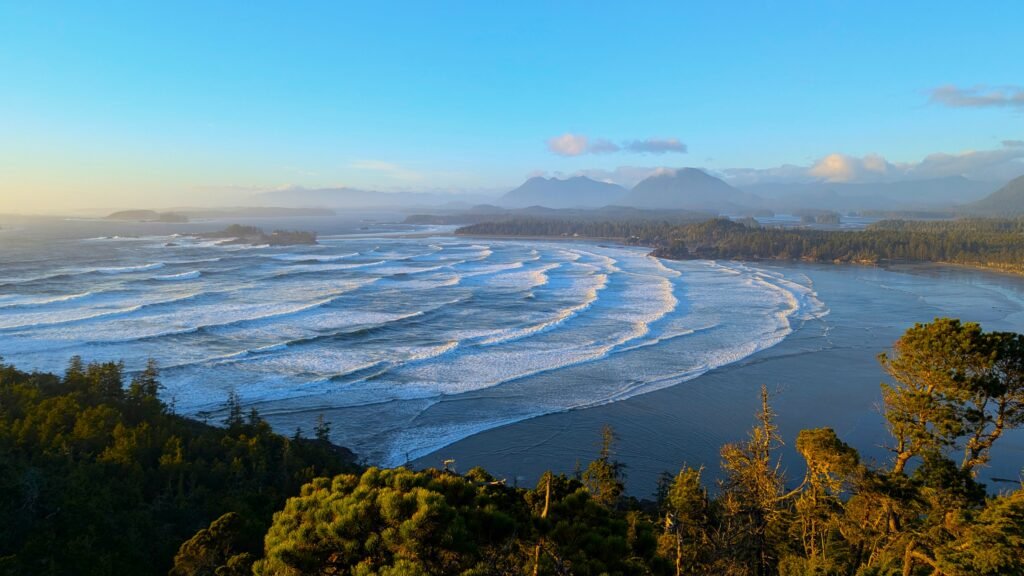
Canada’s far west. Home to incredible coastlines, epic mountains, phenomenal wildlife (both on land and in the oceans) and great cities like Vancouver.
Page coming soon; stay tuned!
Canada Blog Posts


Overview Summary
I love Canada! It’s also a country with vast landscapes, diverse people and boundless adventure. Being a developed first-world country, it is more expensive than some other destinations where your money will go further; however, even if you are on a budget, you can make it last by doing lots of hiking and camping. As someone who enjoys adventures like hiking, climbing and wildlife, I can think of nowhere better to explore than “the true north”, Canada.
I hope that you have found this free Travel Guide useful. It took a lot of time and travel for me to make this, so if you would like to show your thanks by sending a small donation, I would be very grateful. This can be done on my Support Me page. Thank you!
Happy travels!
Andy Argo
You may also like…
Enjoy hearing incredible stories of travellers from all walks of life as they share their stories of exploring the world
Check out my top tips for travellers – whether you’re planning your first trip or continuing the adventure!
Looking to save some money on travel and adventure brands? Use my exclusive discount codes to save on your next trip!
Title image: Bighorn sheep on the outskirts of Jasper, Alberta (before the 2024 wildfires).