
Mongolia
Travel Guide
Mongolia Travel Guide 2026
How to use my travel guides
My travel guides are organised in two main sections:
Overview
This will help you to decide if this is a location for you, and if so, where you may want to spend your time. For larger countries, I also provide additional overviews of different regions, states and territories.
Best things to do in…
Here I list specific things to see and do. For each, I provide star ratings so that you can easily see how good, unique and adventurous each place is. This means that you can easily pick out where sounds right for you!
Photos note: All of the photos you see on my website are taken by me or of me!
Overview
What a place! Mongolia is nothing short of incredible. If you want luxury or beach resorts, this isn’t for you, but if you want endless adventures, wildlife and to experience life from another age, then Mongolia could well steal your heart as it has mine. Mongolia has everything an adventurer seeks to find. To give you a brief taste of what you can expect, you will find:
People – Who survive in remote places with scarce resources and extreme weather conditions.
History – From ancient burial mounds to the walls of Karakorum and the legends of Genghis Khan.
Landscapes – with the Gobi desert to the south, the central steppes, the northern lakes and valleys or the western mountains.
Wildlife – From horses running free across the steppe to the giant eagles in plain view.
Adventure – Mongolia is a huge expanse of land. Besides the capital of Ulaanbaatar and a few small towns dotted here or there, you will find that there is no land ownership. The land is communal and the sky is the limit. Do you want to rent or buy a horse or motorbike and set off across the steppe? Of course you can, you’re in Mongolia! You can travel, hike, ride and camp pretty much anywhere here; no fences, no walls and the only limits are your own abilities, preparation and determination! Disclaimer: Adventure at your own risk!
I am often asked what my favourite country I have been to as a traveller is, I used to struggle to say…until I went to Mongolia. Ever since, it has held the top spot!
Language
Most people speak Mongolian, besides people of Kazakh descent who live in the Altai mountains to the west and who speak Kazakh as their first language. Very few people speak any English. Some older people in the capital city, Ulaanbaatar, did speak to me in Russian when passing in the street, but Mongolian is the main language. It uses the cyclic alphabet, although I hear that they are reintroducing their own vertical writing over time. It helps to learn some basic words in Mongolian. I found I picked it up somewhat quickly because of the high exposure to it, since most people speak no English. What I did learn seemed intuitive and relatively easy to grasp. Make sure you download Mongolian for offline use on the Google Translate app. This often doesn’t work well with translating English to Mongolian, but it is better than nothing. I also played some epic games of chess as a way of bonding with locals too, which was good fun and which makes for a nice way to bond withough needing to speak the other’s language. .

Economy
Mongolia has a large nomadic community with many people living a similar lifestyle to that of their ancestors thousands of years ago. People may have replaced horses for motorbikes as their main mode of transport and have better-made metal stoves in their gers (yurts), but other than tha,t it’s largely the same. People typically keep animals, be it goats, yaks or horses. These are often left to roam with the locals tracking them down and herding them. There is only one ‘real’ city in Mongolia, which is the national capital of Ulaanbaatar. The centre is easy to navigate; however, the city as a whole is a sprawl. You will find some modern buildings, such as the modern parliament buildings and some banks in the financial district; however, much of the centre is old Soviet-era architecture.
Chinggis Khaan International Airport is the country’s only major international airport. It is small but modern and clean. It is around a 1h15mins drive south of the centre of Ulaanbatar. I would recommend asking your hostel or hotel to book you a taxi for when you land, as buses to and from the airport are not frequent and taxis are cheap. One of my favourite memories of Mongolia was driving by the airport and seeing modern aircraft landing while at the end of the runway was a ger (yurt). In one glance, it was like seeing the 21st century landing next to something which wouldn’t have been out of place 2,000+ years ago; it was an incredible sight to see.
Safety
- City Safety
Mongolia is, on the whole, incredibly safe. Unlike in some other parts of Asia, you will not find the locals flocking to you because you are a foreigner. The people are polite, respectful, but not gushing. The only exception I found was that two of my friends are ethnically Indian and some locals took more of an interest in them, which my friend believed was because many Mongolians enjoy Bollywood movies. There are few people in Mongolia for such a vast country and even fewer tourists, so you will stand out by the way you look and the way you dress. I did not feel unsafe because of the people at any time in my trip, be it meeting Nomads or venturing the streets of Ulaanbaatar at night. That being said, keep your wits about you. I have heard that the police are inclined to require bribes from time to time so if you are driving yourself anywhere (renting motorbikes is quite common for adventurous tourists) it may be best to avoid them where possible. - Rural Safety
The only issues I have heard of among tourists are that some French girls I met in a hostel had a bad experience with horse guides on a tour. I met lots of people who did horse tours and had no issues, so I believe the vast majority of guides are amazing, but go with a reputable company and try to travel with people you trust. To be extra safe, you could consider buying a padlock with a flexible locking wire, which could be used to padlock together the zips of your tent. You can also buy large knives at the Narantuul Market (AKA the Black Market), which I discuss under my specific recommendations for Mongolia. - Wilderness Safety
Mongolia is remote. Roads are few and far between and you will spend a lot of time far from assistance. Even in the summer, parts of Mongolia can be cold and exposed and in others, with extreme heat. If you get injured or your vehicle has issues, you can come into difficulty. Despite not having great roads, I strangely found very good phone reception in Mongolia, potentially because it’s quite flat there, but you still have plenty of places with no signal. Travelling in a group can make things much safer. I had one occasion where my rental motorbike had an oil leak and stopped working. I was in a very remote area, but luckily with a friend who was able to ride on ahead, get oil and return so that I could limp my bike into the next town to be repaired.
- Animal Safety
Many visitors to Mongolia also do horse trekking too. The horses are pretty intuitive to ride there and given their small size, they are easy to mount and ride, however if you egg them on, they can be very hard to stop. Being thrown from horses can still happen and unlike in Western countries, you will find Mongolians don’t bother with head protection and it’s not given to tourists either.

Mongolia has some beautiful animals, but you should note that wolves are a real issue. Many of the nomads keep large dogs called Bankhar Dogs around their camps to protect themselves and their livestock. Be aware that these dogs are beautiful but also massive and if they are aggressive (which many are bred to be to fight off the wolves), they can be scary. Many a time, I would drive past a ger (yurt) on a motorbike, only to have these bear-like dogs chasing after me, snapping at my heels. The crazy thing is that they can keep pace with you on a bike, although most seem happy to only intimidate without actually attacking people. If you see any check with the owners before you approach them, especially if the dog is chained up.
On another occasion in wolf country, I was invited by nomads to camp near them so that their dog would protect me, as there were a lot of wolves in the area. The dog was chained up in the day and I was told to have a pee before bed because they unchain the dog at night to patrol around and it would attack me as well as the wolves – safe to say I limited my water intake that evening! In that same area, I had also seen the locals riding on motorbikes with rifles slung over their shoulders during the daytime, given the likelihood of wolf encounters. The day after this, I camped half a day’s ride away by bike and had a wolf stalk around my tent at night, eat my food leftovers (which I had stupidly risked not cleaning the day before because I was so tired) and even steal my cooking pot (no joke). I’ll write a blog about this at some point in more detail, so stay tuned, as that was my scariest travel to date. Going with a tour group can also make things a lot safer.
Ease of travel
If you are travelling for ease and comfort, Mongolia isn’t the place for you. Getting anywhere in Mongolia typically requires some effort and discomfort.
- Flights
There are some domestic flights, for example, some people choose to fly from the capital city of Ulaanbaatar to Ölgii in the Altai Mountains, located in the far west of Mongolia, rather than taking the incredibly long bus journeys that it would otherwise take to get there. - Trains
The Trans-Mongolian Railway goes north-south across Mongolia through Ulaanbaatar. It is an off-shoot of the Trans-Siberian Railway, which runs west-east across Russia from Moscow to Vladivostok. Subject to having the correct visa for entering China (which cannot be obtained in Mongolia, so make sure you get it before entering Mongolia), you can travel by Train from Ulaanbaatar to Beijing, China. - Roads
There are paved roads in Mongolia and these are typically well-maintained spanning some of the larger distances in Mongolia. For example, if you wanted to drive in a cardinal direction from the Capital of Ulaanbaatar, you would find them, but as soon as you go to explore the rest of the countryside, you will typically find dirt roads at best and often no roads at all, just the odd trail to find. Many of the most beautiful places in Mongolia are nowhere near paved roads, so look into tours once you arrive to keep you safe. I rode a bike while there and often found that even tracks would split near rivers where people have chosen different fording points and then they reconnect on the other side, leaving you to gamble as to which is the best route to cross a river. This takes me onto my other point of bridges, these are also few and far between once you get away from the main paved roads. You will find buses and grey Russian vans are a typical means of longer-distance road travel in Mongolia while you’re there. Neither are they normally particularly comfortable, but let’s be honest, if you are considering going to Mongolia, you are probably going there for these off-road adventures! Mongolia is a massive country and its limited infrastructure means that traversing it takes way longer than you would expect. - Hiking
The hiking in Mongolia is amazing; however, the distances are so vast that it’s overoptimistic to expect to hike your way around it. You will need to organise transport to get you in the vicinity and then hike away. There aren’t many formal hiking trails, but to me, that’s what I love. I would often find somewhere that appeals and just hike wherever! Typically, there are no fences or walls to stop you and you can go wherever you like. Be aware, however, that some mountains are sacred to the locals you may be asked not to reach the official summit in some areas. Ultimately, though there is no way of finding out unless you speak to some locals who may mention it. - Taxis
There are a few dedicated taxi firms and as mentioned, I recommend asking your hostel/hotel to arrange your transport from the airport to your accommodation for you when you arrive. Hitchhiking also isn’t a thing over there. When I was there, some locals told me there is an old folktale which has warned locals off picking up people. That being said, in Ulaanbaatar, pretty much everyone is a spontaneous taxi driver. What I mean by this is that if you stand by a roadside with you arm by your sides and then extend your arm nearest the road to be two feet away from your body with a straight hand and hold it there with your fingers still facing towards the ground and looking akin to an impersonation of a penguin you will find locals will stop to pick you up. If locals in their own cars have time, they will charge you a small fee for taking you to where you need to be and you can use this to get around very quickly and easily. - Language
Very few people speak anything other than Mongolian, especially once you leave Ulaanaabatar, so check out my previous comments on that if you haven’t already. This can make travelling here more difficult.


Haggling Culture
Under my specific recommendations, I mention the Narantuul Market (AKA the Black Market). When I was there, I found prices really affordable. Also, I noted that locals charge a fair price and do not haggle like in much of the rest of Asia. From my experience, it was more like buying something from a supermarket where the price is the price, and it’s often a fair price too, and I didn’t notice anyone trying to charge me more for being foreign, as can be the case in other parts of the world.
Beaches
If you are looking for a beach holiday, Mongolia is not the place for you. Mongolia is famously landlocked. The nearest sea is the Yellow Sea, which is around 650km (400 miles) south of Mongolia’s eastern tip, with the majority of Mongolia being further from the sea. You will find plenty of lakes in Mongolia, but they are often quite ‘refreshing’ to swim in, to put it mildly. I swam in Lake Khuvsgul (northern Mongolia), which was very cold and Khuisiin Naiman Lake (central Mongolia), which wasn’t as cold but definitely wasn’t warm either.
Wildlife
The wildlife in Mongolia is phenomenal! You will find lots of managed animals which appear wild: horses roaming, yaks, camels, etc. however these typically have owners, but they let them roam free range with no fences required. You will often see the locals herding animals in for the night with great skill; even those below the age of 10 are typically excellent riders in these communities, with children being born in the saddle. Many locals keep goats as well, which they slaughter for meat.
Plenty of wild animals exist too. I will never forget the sheer number of birds of prey there. As there are no trees in much of Mongolia, it’s not uncommon to see massive eagles sitting on the ground and as I rode by on my motorbike, they would take off and soar overhead. These moments are some of the most memorable of my life. Wolves are also common; they pose more of a risk to animals than humans, although attacks can happen. Follow local advice and see my comments under ‘safety’. The nature is stunning, however, and there is nothing like riding past wild horses!
Also, see my specific recommendations for more information on visiting the Tsaatan (AKA Dukha) people in northern Mongolia. These people are incredible, living in remote valleys in northern Mongolia and living off and riding reindeer!
Ultimately, what animals you find will vary depending on where you are in Mongolia, given the drastically different environments and climates across the country, which include the Gobi desert in the south, the Altai Mountains in the west, the valleys and lakes of the north and of course, a lot of steppe.
Cities
There are some smaller towns dotted around Mongolia, many of which remind me of western movies. They are largely spaces with rustic dwellings and often some essentials such as a small petrol (gas) station and shop. Many do have a mechanic or someone who is handy enough to make essential repairs and welders, etc. Mongolia has some more affluent and modern towns in the Gobi to the south due to many people here working in the mines.
The only ‘real’ city in Mongolia, from what I saw, however, was the capital of Ulaanbaatar. It’s a nice city and I enjoyed it there. It has some more modern buildings like the parliament building and some in the banking district, however, many in the centre are Soviet-era buildings. The city is large and sprawling, with a lot of suburbs in the surroundings. The population of the city fluctuates drastically, with it getting noticeably busier in September as many children and families move into the city for the start of the school year and to ride out the brutal winters in the city.
People
The people are incredible. The nomads in particular are very hardy and resilient, surviving in remote areas and varied places, with the majority living in gers (yurts) dotted around the landscape. As well as your ‘typical’ Mongolians, you also have the Tsaatan (AKA Dukha) people in northern Mongolia, who are of Turkic and not Mongolian ethnic origins. You will also find ethnic Kazaks in the Altai mountains in the west of Mongolia. You will, of course, find differences between Mongolians depending on where you go, with accents and lifestyles varying from place to place. Despite Mongolia not having many foreign visitors, you will often find the locals are not gushing when they see you, as is the case in much of Asia, which makes for a nice change. They are polite, friendly and fascinating. Many nomads wear the iconic deel robes.

One of my favourite examples of how impressive these people are was my horse guides when I was in the far north of Mongolia. I was on a 10-day horse trek with four other tourists and two guides. Between us five tourists, we had two pack horses for our supplies, our two guides…. Zero. They carried a small tent on the back of one of their horses with them; however, besides that, they would travel incredibly light, pulling out items like magic from their iconic ‘deel’ robes: some dry meat here or there to keep them going. When it rained hard for a full day of trekking, I pulled on my waterproof jacket and trousers; my local guides, in contrast, simply soldiered on in their thick deel robes.
If you want to curry favour with nomads, then it doesn’t hurt to take some whiskey, cigarettes and other goods from the capital with you into the wilds, so if you meet nomads or if they offer you some assistance, you can give them some luxuries in exchange. Many thanks, things are incredibly difficult to get outside of the capital and what you can get, for example bars of chocolate, cost significantly more the further you get from Ulaanbaatar.
Food
In the capital of Ulaanbaatar, you will find a greater range of food, including ramen and lots of Korean food – Korea influencing modern Mongolian culture. As for Mongolian cuisine, however, it is limited by the extreme climate and conditions in Mongolia. Many traditional foods are made from animal meat and milk. In the Gobi desert, I stayed with nomads who kept a herd of goats, which they would milk and kill for sustenance. Despite having limited resources, Mongolians are incredibly inventive with what they can make from just a handful of ingredients. I enjoyed trying Airag (pronounced similarly to ‘air-egg’), which is alcohol made from fermented mare’s milk and is surprisingly nice and which you have to try if you go there. Other nomads offered me a sweetened curd-like food made from cream, which was really tasty too.
If you are a foody who wants 50 different species and herbs in each mouthful, then Mongolia isn’t for you, but if you are feeling adventurous, Mongolia is a good choice. I tended to eat like a local and then enjoy international cuisine when I was back in the capital before heading off again. Bear in mind that if you have any dietary requirements, you may find parts of Mongolia quite challenging, especially for vegetarians and vegans, who may find long-term remote travel here near impossible. I travelled in Mongolia with a friend who keeps kosher. As the locals typically speak no English, I found it hilarious to watch her acting out animal impressions to the baffled locals in their gers (yurts) as she tried to ascertain what she could eat or not. She is also celiac, however, and she survived ok there. If you do have dietary requirements though, maybe ask a local in Ulaanabaatar to translate something for you in writing to show people to make your life easy.


History
Mongolia’s history is so long and fascinating that it’s hard to do it justice here, but I will mention some key points in its history.
Many people will be familiar with Chinggis Khan, a man known to many Westerners by the bastardised name of Genghis Khan. He was famous for unifying Mongolian tribes in 1206 and creating a formidable army of well-disciplined horse-archers. He conquered vast lands across Asia, with his descendants going on to conquer all the way into eastern Europe. He was a ruthless leader and many who faced him and his descendants faced extermination. Some estimates say that he and the Mongol empire killed over 10% of the entire world’s population during the 13th century, exterminating around 40 million people. Legend even says that his burial site remains a mystery, with those who buried him being slain and those who killed the workers themselves being killed to keep its location a secret.
The Mongols are also famous for conquering China, with the Yuan Dynasty (1271–1368) being led by the Mongolian Kublai Khan. Kublai Khan famously met the Venetian explorer Marco Polo on his adventures in the east.
The Mongol Empire eventually fell to the Chinese Qing dynasty and with the former Mongol capital of Karakorum being sacked and destroyed by the Ming Dynasty, although some of it has been reconstructed and is worth paying a visit to.
More recently, Mongolia became a puppet state of the USSR in the 1990s when it transitioned from communism to it now being a democracy. The country has kept its independence as it serves as an important buffer state between Russia and China.
In Ulaanabaatar, you will find a lot of communist-era architecture and even some nice murals on the side of them too, which I recommend in my specific recommendations for Ulaanabaatar. Mongolia also celebrates Chinggis (Genghis ) Khan with him being seen in statues everywhere, including being mounted on the largest equestrian statue in the world, located just east of the capital. You will also see the main international airport named in his honour and his face on their banknotes. Despite changes happening in Mongolia, what I love about it is that it feels like a living time machine. Many locals still live a lifestyle which is largely the same as how their ancestors lived over 2,000 years ago! You will also stumble across ancient burial mounds and Buddhist monasteries in beautiful and remote places, many of which aren’t marked on maps. When you explore rural Mongolia, it can sometimes feel like you landed in the country in a time machine and not an aeroplane.


Regions Overview
Mongolia only have one ‘proper’ city, which is the sprawling and lovable capital of Ulaanbaatar, which means ‘red hero’, a legacy from its communist era.
In general terms, the centre and east of the country have a large amount of steppe (vast flat grasslands), although there are also some beautiful mountains and valleys too, especially around the nation’s ruined historic capital, Karakorum. The south is largely the Gobi desert, which has some sand dunes but is mainly more of a dirt/gravel-like desert. In the north, there are massive lakes, beautiful mountains, more trees and small towns which make you feel like you are in a western movie. The far west has the Altai Mountains, which are beautiful and regarded by some as ‘the Switzerland of Asia’. The people here are also ethnically and linguistically Kazakhs.
These are very general terms as there are many anomalies to my generalisation. Mongolia is massive, and its landscapes blend and differ.
For my specific recommendations, I have separated them into those in the capital, Ulaanabatar and those outside the capital.
Overview Summary
If you want to experience nature and something which feels really, really real, then Mongolia is a great place. I spent two lovely months there and have never been so sad to leave; my visa ran out, otherwise I would have gladly stayed longer!

Best things to do in Mongolia 2026
I provide star ratings for each of my recommendations so that you can quickly narrow down what appeals to you. Explanations for what these mean can be found here.
I use Google Maps to plan all my trips and it’s a game-changer! I’ve added links to Google Maps for each of the locations below so you can easily add them to your own map. Be sure to copy this web link into the description of each location you save so that you can easily refer back to this guide later. Check out this blog for more tips on how to use Google Maps to enhance your travels!
Best things to do in Mongolia 2026
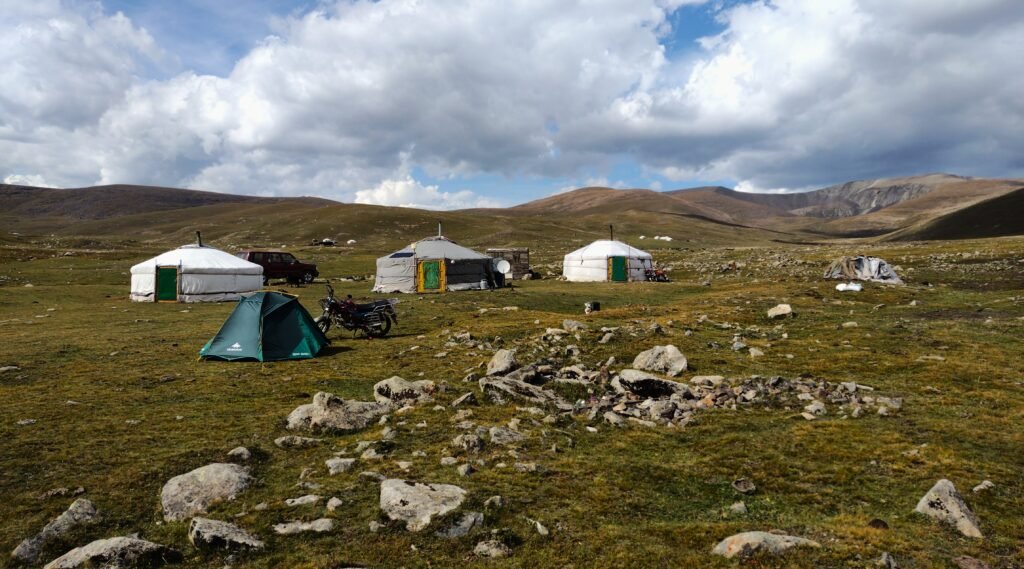
Specific recommendations for in favorite places to visit in Mongolia
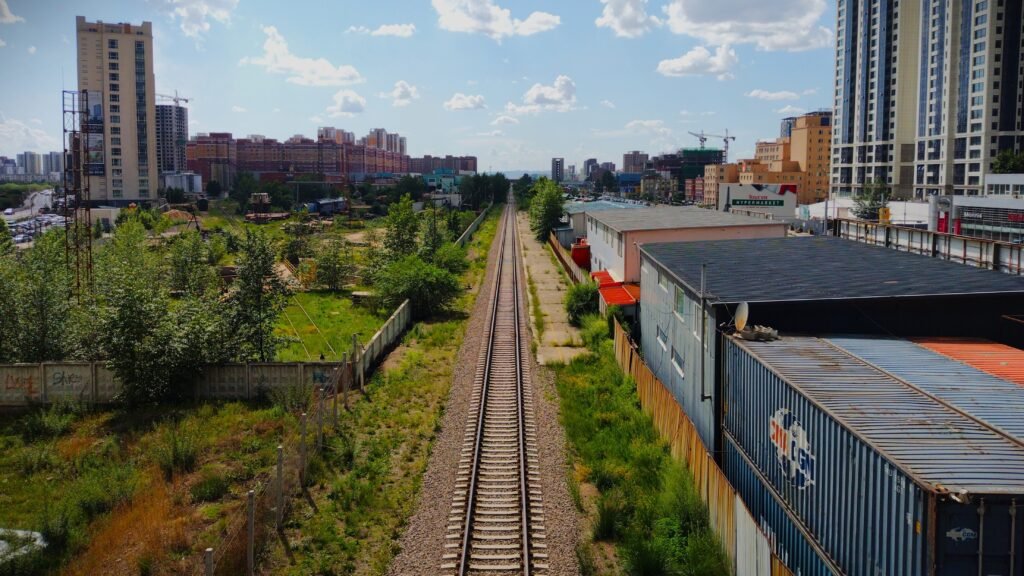
A guide for the best places to visit in and around Ulaanbaatar, Mongolia’s capital city
I hope that you have found this free Travel Guide useful. It took a lot of time and travel for me to make this, so if you would like to show your thanks by sending a small donation, I would be very grateful. This can be done on my Support Me page. Thank you!
Happy travels!
Andy Argo
You may also like…
Enjoy hearing incredible stories of travellers from all walks of life as they share their stories of exploring the world
Check out my top tips for travellers – whether you’re planning your first trip or continuing the adventure!
Looking to save some money on travel and adventure brands? Use my exclusive discount codes to save on your next trip!
Title image: Central Mongolia. The horses came over to say hello as I was packing up my tent during a solo motorbike/camping trip. They got pretty close, almost within reach, but then one got spooked, and then they all got startled and ran away. What a beautiful way to start the day though!